-
€ 25,50

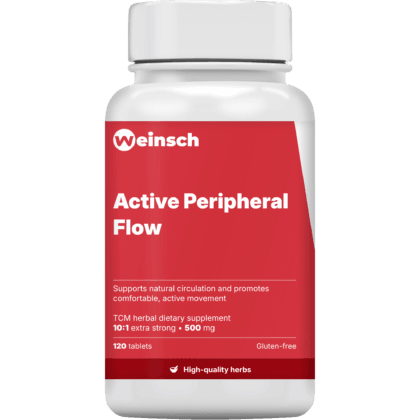
Active Peripheral Flow
Tail of Chinese Angelica Root
Tail of Chinese Angelica Root (Dang Gui Wei) – The Botanical Used in Traditional Systems to Support Blood Circulation and Ease Physical Tension
Tail of Chinese Angelica root (Dang Gui Wei) is the traditional Chinese medicine name for the fine root ends of Angelica sinensis, a highly valued botanical that has been a cornerstone in East Asian herbal systems for millennia. It is regarded as an herb with warming and strongly circulating properties, particularly suitable for formulas aimed at cardiovascular comfort, restoring healthy blood flow, and relieving localized tension.
Traditional Understanding in TCM Systems
Within traditional Chinese medicine, the tail of Chinese Angelica root (Dang Gui Wei) is described as a fragrant substance with sweet, pungent, and warm properties. In the TCM theoretical framework, it acts primarily on the Liver, Heart, and Spleen meridians. According to this traditional description, while the main body of the root nourishes the “Blood,” the tail section specifically focuses on vigorously moving it to dispel “Stasis” – a TCM concept referring to sluggish or blocked physical circulation. When blood flow becomes sluggish from injury or cold, discomforts like fixed tension or circulatory stagnation can arise. The tail of Chinese Angelica root (Dang Gui Wei) helps perform a dynamic “moving and unblocking” effect.
In TCM formulas, the tail of Chinese Angelica root (Dang Gui Wei) is seen as a botanical that helps promote normal blood circulation and warm the energy pathways. It is traditionally used to support a healthy menstrual cycle, alleviate physical tension from localized stagnation, and gently encourage tissue recovery.
Botanical Composition and Research
The tail of Chinese Angelica root (Dang Gui Wei) contains a potent profile of volatile oils (notably ligustilide), ferulic acid, coumarins, and various polysaccharides. This phytochemical profile is connected in traditional applications with the physical warming of tissues and the promotion of vascular vitality.
Modern scientific research shows that Angelica root extracts can offer specific benefits. Studies show that preparations of the tail of Chinese Angelica root (Dang Gui Wei):
-
Possess strong antioxidant properties and help protect vascular cells
-
Can support normal blood circulation and microcirculation
-
Can have mild anti-inflammatory actions for tissue recovery
-
Can promote a healthy menstrual cycle and uterine comfort
-
Can work supportively on normal cardiovascular health
-
Contain volatile oils that may relax smooth muscle tissues
-
Are used in traditional formulas with enhanced effects on metabolic flow
Scientists particularly investigate how the ligustilide and ferulic acid components of the Angelica root can contribute to normal blood viscosity and normal tissue repair processes in the body.
Traditional Applications – TCM Context
In traditional TCM formulas, the tail of Chinese Angelica root (Dang Gui Wei) is classically used in situations described as:
-
Localized discomfort or sharp, fixed physical tension
-
Irregular, delayed, or uncomfortable menstrual cycles
-
Sluggish circulation leading to cold extremities
-
Recovery from minor physical bumps, bruises, or sports injuries
-
Skin issues tied to poor surface circulation or stagnant blood
-
A general feeling of blocked internal energy following trauma
These are traditionalist descriptions that form part of the TCM thinking system and must not be equated with medical diagnoses in the sense of European medicinal product law.
Well-being and Daily Use
The tail of Chinese Angelica root (Dang Gui Wei) is valued by modern users as part of a conscious wellness routine aimed at circulatory health and physical recovery, especially when they maintain active lifestyles, experience sports-related physical tension, or have menstrual discomfort. The herb works optimally in balanced herbal mixtures, combined with adequate hydration, a nutrient-dense diet, and restorative rest.
Many users see the tail of Chinese Angelica root (Dang Gui Wei) as part of a holistic approach to physical flow and vascular vitality – as a supportive element in traditional routines, alongside professional guidance and regular medical care when needed.