-
€ 27,50

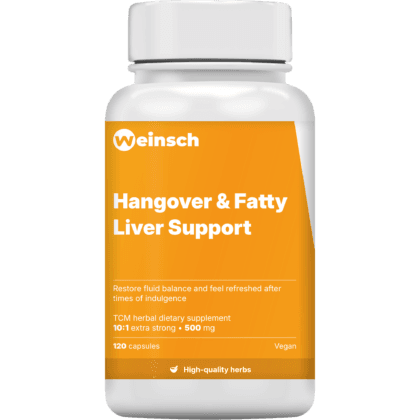
Hangover & Fatty Liver Support
Gǎi xìng diàn fěn
Modified Starch (Gǎi xìng diàn fěn) – Technologically altered carbohydrate used as an advanced excipient
Modified starch (referred to in Chinese as gǎi xìng diàn fěn, 改性淀粉) is a plant-derived starch that has been physically, enzymatically, or chemically treated to alter or enhance its natural properties. In dietary supplements, it is utilized as a highly functional technical excipient that provides improved stability, solubility, or controlled release of active ingredients.
Characteristics, Origin, and Composition
Native starch (from sources like corn, potato, or tapioca) is useful but can fall short of meeting complex technological demands—such as remaining stable at high temperatures, in acidic environments, or when exposed to fats. Through modification, the molecular structure of the starch (the amylose and amylopectin) is restructured. This yields new variants, ranging from pre-gelatinized starch that dissolves in cold water, to starches capable of binding fat and water (such as starch sodium octenyl succinate, E1450). Although “modified” might sound like genetic modification (GMO), in this context it refers strictly to the technological processing of the starch itself, not the plant’s DNA.
Use in Dietary Supplements
Modified starch is commonly used:
-
As a superior emulsifier or encapsulation material, to process fat-soluble vitamins (such as vitamins A, D, or E) and oils into water-soluble powders and protect them from oxidation.
-
As a high-performance binder and disintegrant in tablets, ensuring that firm tablets break apart quickly and evenly in the stomach.
-
In liquid supplements or gels as a stabilizer and thickener, preventing ingredients from settling or separating.
-
As “resistant” modified starch, which is sometimes included in weight management or blood sugar support formulas because it acts like a fiber and causes fewer blood sugar spikes.
The amount used varies widely; as a technical excipient or for vitamin encapsulation, it involves fractions of a gram, whereas in fiber formulas it may be present in larger amounts.
Everyday Use and Well-Being
When used in appropriate amounts, modified starch enables manufacturers to create supplements that are more stable, effective, and have a longer shelf life. Dietary supplements do not replace proper nutrition or medical treatment. Individuals with an allergy to the original source of the starch (such as wheat or corn) should check the label to determine its origin, and when in doubt, seek advice from a doctor or other qualified health professional.