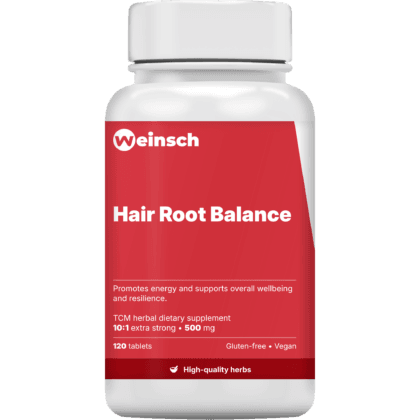
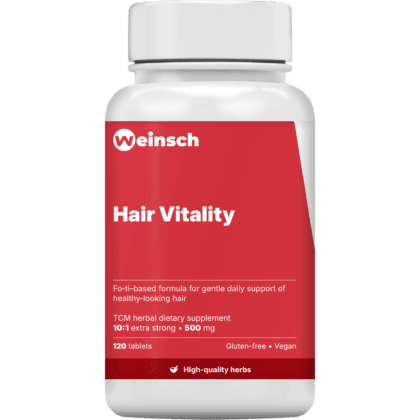
-
€ 29,50

Hair Root Balance
-
€ 25,50

Hair Vitality
Papaya
Papaya (Mu Gua) – The Fruit Used in Traditional Systems to Support Tendon Comfort, Digestive Harmony and Dampness Resolution
Papaya (Mu Gua) is the traditional Chinese medicine name commonly rendered in English as papaya, although in classical Chinese materia medica it usually refers to the dried ripe fruit of Chaenomeles speciosa (Sweet) Nakai or related Chaenomeles species, also known as Chinese quince, rather than tropical papaya ∗Caricapapaya∗∗Caricapapaya∗. This fruit has been used in traditional East Asian herbal systems for over 2000 years. It is regarded as a sour, warming herbal fruit particularly suitable for formulas aimed at supporting tendon flexibility, harmonizing digestion and resolving so-called dampness in the body.
Traditional Understanding in TCM Systems
Within traditional Chinese medicine, papaya (Mu Gua) is described as a sour herb with warming, transforming and harmonizing properties. In the TCM theoretical framework, it acts on the so-called Liver and Spleen meridians. According to this traditional description, papaya (Mu Gua) relaxes the so-called “sinews” and transforms so-called “Dampness” – a TCM concept describing heaviness, stagnation and impaired fluid movement. When Dampness accumulates and the sinews are not properly nourished, related discomforts such as cramping, stiffness, heaviness in the limbs and digestive unease can arise. Papaya (Mu Gua) helps perform this “relaxing and transforming” effect.
In TCM formulas, papaya (Mu Gua) is seen as a fruit that helps support normal muscle and tendon comfort, harmonize the Stomach, and reduce the effects of damp accumulation, especially in humid or warm seasonal conditions. It is traditionally used to promote flexibility and ease of movement, reduce cramping in the limbs, support digestive comfort, and foster general harmony between fluid metabolism and physical mobility.
Botanical Composition and Research
Papaya (Mu Gua) contains primarily organic acids, including malic acid, citric acid, quinic acid and tartaric acid, alongside triterpenes such as oleanolic acid and ursolic acid, flavonoids, phenolic compounds, tannins, pectin, polysaccharides and volatile aroma constituents. This phytochemical profile is connected in traditional applications with support for normal inflammatory balance, digestive comfort and connective tissue well-being.
Modern scientific research shows that papaya (Mu Gua) preparations can offer specific benefits. Studies show that papaya (Mu Gua):
-
Possesses antioxidant activity and can help counter free radicals.
-
Can have anti-inflammatory action, particularly relevant to connective tissue and digestive tissues.
-
Can support normal gastric function and digestive comfort.
-
Can possess antimicrobial activity relevant to intestinal balance.
-
Can support normal muscle and tendon comfort through its triterpene and polyphenol content.
-
Can work supportively on normal fluid balance and seasonal digestive resilience.
-
Can possess mild protective activity for mucosal tissues.
-
Is used in traditional formulas to relieve cramping, heaviness and digestive discomfort linked to dampness.
Scientists particularly investigate how the organic acids, triterpenes and polyphenolic compounds of Chaenomeles speciosa can contribute to normal inflammatory balance, normal digestive mucosal integrity and normal connective tissue comfort.
Traditional Applications – TCM Context
In traditional TCM formulas, papaya (Mu Gua) is classically used in situations described as:
-
Cramping, tightness or stiffness in the calves, feet or hands.
-
Tendon discomfort or reduced flexibility after physical strain.
-
Heavy or sluggish sensation in the limbs from damp accumulation.
-
Nausea or digestive upset during humid or hot weather.
-
Loose stools or abdominal discomfort associated with so-called summer dampness.
-
Reduced appetite or fullness after eating.
-
Lower-leg weakness or discomfort with a damp pattern.
-
General bodily stiffness with digestive unease in seasonal humidity.
These are traditionalist descriptions that form part of the TCM thinking system and must not be equated with medical diagnoses in the sense of European medicinal product law.
Well-being and Daily Use
Papaya (Mu Gua) is valued by modern users as part of a conscious wellness routine aimed at movement comfort, digestive harmony and resilience during humid or heavy seasonal conditions, especially when physical tension, cramping or digestive sluggishness affect daily well-being. The fruit works optimally in balanced herbal mixtures, combined with regular stretching, moderate movement, adequate hydration and a diet that avoids excessive greasy or damp-forming foods.
Many users see papaya (Mu Gua) as part of a long-term approach to tendon comfort, digestive balance and fluid harmony – as a supportive element in traditional routines, alongside professional guidance and regular medical care when needed.