Black Pepper (Piper nigrum) – Warming Traditional Herb in Modern Supplements Supporting Inner BalanceBlack pepper (Piper nigrum) is the dried unripe berry of the pepper vine and has long held a dual role as a culinary spice and a traditional herbal ingredient. In contemporary supplement formulations, black pepper – most often as a standardised extract – is included at low levels to complete herbal blends and, in line with traditional ideas, to add a gently activating, warming note to the formula.Traditional Understanding in TCM SystemsWithin traditional Chinese medicine (TCM), black pepper is regarded as a warm, pungent herb that warms the “middle burner” (the Spleen/Stomach system) and promotes the movement of Qi. Traditional pattern language associates it with resolving internal “Cold”, sluggish digestive energy, and a sense of heaviness in the central abdominal region. It is sometimes used in small amounts to support other herbs in a formula, helping to “open” and guide their action in the middle burner. Terms such as Qi, Cold, Yang, and the Spleen/Stomach meridians belong to a traditional theoretical framework and must not be interpreted as anatomical or diagnostic labels in the modern medical sense.Botanical Composition and Modern Research FocusBlack pepper contains volatile essential oils responsible for its aroma, along with the alkaloid piperine, which confers its characteristic pungency. In traditional practice, this pungency is linked with a dispersing, moving quality. Modern research primarily focuses on piperine and its potential to influence the bioavailability of certain nutrients and phytochemicals, for example by modulating intestinal enzymes and transporters. Additional minor phytochemicals in black pepper may also contribute to its overall profile, though they are typically secondary to piperine in current research. This scientific perspective complements, but does not replace, the energetic language used in TCM to describe the herb.Traditional Applications – TCM ContextIn TCM‑inspired formulations, black pepper is classically used in scenarios described as:A sensation of “Cold” and sluggishness in the middle region after meals, with a desire to gently stimulate digestive warmth.A need for a mildly warming, activating component to balance other, heavier or more static herbs in a blend.Situations where, in traditional terms, a sharp, penetrating flavour is used to assist the movement of Qi and to help guide other herbs to the middle burner.These descriptions are part of the TCM conceptual system and are not medical diagnoses or authorised health claims under European law. Products containing black pepper are intended for general well‑being within a lifestyle framework, not for the treatment of disease.Well‑being, Combinations, and Daily UseIn modern supplements, black pepper or standardised piperine extract is usually present in small quantities alongside other herbs such as turmeric, ginger, or broader herbal complexes. The role of black pepper is primarily modulatory and supportive rather than acting as a main active on its own. Such products are best used alongside a varied diet, regular physical activity, adequate rest, and appropriate professional guidance where required.Black‑pepper‑containing supplements are dietary supplements and do not replace a varied, balanced diet or medical treatment. People with sensitive digestion (for example, a tendency to heartburn), known intolerance to hot spices, pre‑existing gastrointestinal conditions, or those taking prescription medication should seek advice from a doctor or other qualified health professional before long‑term use. Extra caution is advisable during pregnancy, breastfeeding, and when considering use in children; in these cases, the suitability and dose should be discussed with a healthcare professional.
-
€ 16,00

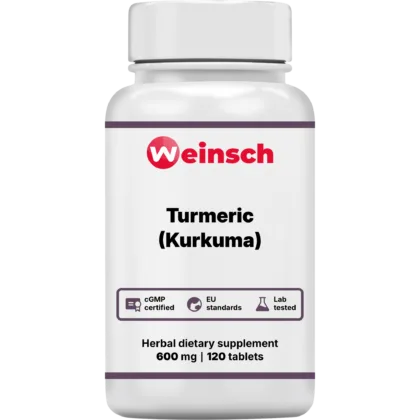
Turmeric (Kurkuma)