White Mulberry Root Bark (Sang Bai Pi) – The Botanical Used in Traditional Systems to Support Respiratory Comfort and Fluid BalanceWhite mulberry root bark (Sang Bai Pi) is the traditional Chinese medicine name for the dried root bark of Morus alba (white mulberry), a remarkable botanical extract that has been part of traditional East Asian herbal systems for over 2000 years. It is regarded as a botanical with cooling and descending properties, particularly suitable for formulas aimed at respiratory comfort, fluid balance, and clearing internal warmth.Traditional Understanding in TCM SystemsWithin traditional Chinese medicine, white mulberry root bark (Sang Bai Pi) is described as a descending botanical substance with cooling and calming properties. In the TCM theoretical framework, it acts on the so‑called Lung meridian. According to this traditional description, white mulberry root bark purges the so‑called "Lung Heat" – a TCM concept that stands for accumulated warmth causing respiratory distress. When Lung Qi fails to descend and heat builds up, related discomforts can arise. White mulberry root bark (Sang Bai Pi) helps perform this "descending and clearing" effect.In TCM formulas, white mulberry root bark (Sang Bai Pi) is seen as an herb that helps support normal respiratory function, stabilize fluid distribution, and calm the airways. It is traditionally used to promote clear breathing, reduce puffiness, soothe persistent coughing, and foster general respiratory calm.Botanical Composition and ResearchWhite mulberry root bark (Sang Bai Pi) contains primarily flavonoids (such as mulberroside A and morusin), alkaloids, coumarins, polysaccharides, and beneficial trace minerals. This botanical profile is connected in traditional applications with support for normal respiratory function and fluid vitality.Modern scientific research shows that white mulberry root bark extracts can offer specific benefits. Studies show that white mulberry root bark (Sang Bai Pi) preparations:Possess antioxidant activity and can combat free radicalsCan have anti‑inflammatory action, particularly for respiratory tissuesCan support normal fluid balance and diuretic functionCan promote normal airway relaxation and antitussive (cough-soothing) effectsCan possess antimicrobial and antibacterial activityCan work supportively on normal blood sugar balanceContain bioactive compounds that may be protective for lung tissuesAre used in traditional formulas with enhanced effects on breathing comfortScientists particularly investigate how the flavonoid components of the root bark can contribute to normal lung cell structure and normal inflammation balance in the respiratory tract.Traditional Applications – TCM ContextIn traditional TCM formulas, white mulberry root bark (Sang Bai Pi) is classically used in situations described as:Uncomfortable or persistent coughing sensationsWheezing or shortness of breathYellow or thick phlegm accumulationFacial swelling or puffinessGeneral fluid retention or edemaDecreased urinary outputFeverish or hot sensations in the chestThese are traditionalist descriptions that form part of the TCM thinking system and must not be equated with medical diagnoses in the sense of European medicinal product law.Well‑being and Daily UseWhite mulberry root bark (Sang Bai Pi) is valued by modern users as part of a conscious wellness routine aimed at respiratory comfort and fluid stability, especially during seasonal transitions, pollen seasons, or when recovering from poor air quality exposure. The herb works optimally in balanced herbal mixtures, combined with healthy hydration, regular breathing exercises, and adequate rest.Many users see white mulberry root bark (Sang Bai Pi) as part of a long‑term approach to respiratory health and fluid balance – as a supportive element in traditional routines, alongside professional guidance and regular medical care when needed.
-
€ 24,50

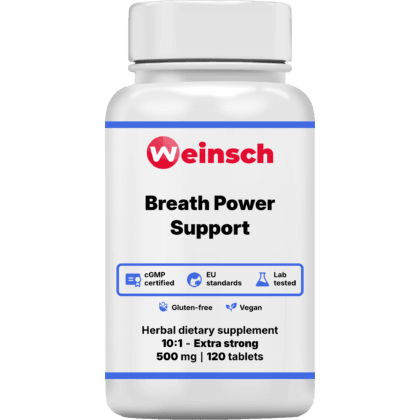
Breath Power Support
-
€ 24,50
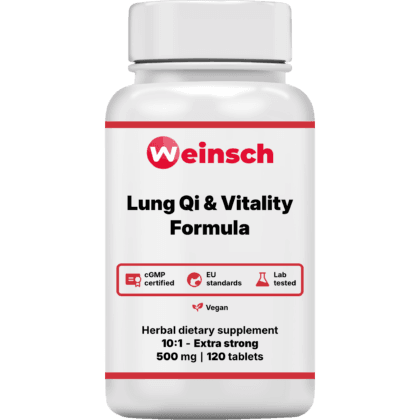
Lung Qi & Vitality Formula