Soybean Oil – Plant‑Based Carrier Oil and Source of Normal Unsaturated Fatty Acids for Cell Membranes, Heart and SkinSoybean Oil is a vegetable oil extracted from soybeans and used in dietary supplements mainly as a neutral carrier oil in softgel capsules and as a source of polyunsaturated fatty acids. It is not a herb but a dietary fat that contributes to normal essential fatty acid intake, supports normal structure and fluidity of cell membranes, and can play a role in normal cardiovascular and skin function as part of an overall balanced diet. In nutraceutical formulations, soybean oil often serves as a base in which fat‑soluble nutrients (such as vitamins, carotenoids, or CoQ10) are dissolved.Systems Perspective – “Unsaturated Fatty Acids and Cell Membranes”Within modern nutrition and systems thinking, soybean oil is viewed as a provider of unsaturated fatty acids (primarily omega‑6 linoleic acid and smaller amounts of omega‑3 alpha‑linolenic acid) that are incorporated into cell membranes, lipoproteins and other lipid structures. From this perspective, soybean oil is said to:support normal composition and fluidity of cell membranes,contribute to normal blood lipid profiles when used to replace saturated fats in the diet,support normal skin barrier and hydration through linoleic acid and natural vitamin E (tocopherols),act as a carrier that helps enable normal absorption of fat‑soluble nutrients such as vitamins A, D, E, K and carotenoids.The emphasis is on soybean oil’s role within the total diet; it is not an isolated “active drug” but part of the overall fatty acid and energy pattern.Distinctive Feature – Neutral Carrier Oil with High Unsaturated Fat ContentSoybean oil is characterised by its relatively high content of polyunsaturated fats and its neutral sensory profile and processing properties. This makes it suitable as:a technical carrier oil in softgels (for example for fish oil concentrates, carotenoids, CoQ10),a plant‑based dietary fat in products where a neutral oil profile is desired,a component of fatty acid blends where a particular omega‑6/omega‑3 balance is targeted.While aspects like smoke point and culinary behaviour matter mainly in food use, in supplements the focus is on stability, compatibility with active ingredients, and its role in overall fatty acid intake.Origin and CompositionSoybean oil is obtained by pressing and/or extracting soybeans, followed by refining steps (such as degumming, neutralisation, bleaching and deodorisation) to produce a clear, bland‑tasting oil. Its fatty acid profile is typically dominated by:polyunsaturated fatty acids: mainly linoleic acid (omega‑6) and smaller amounts of alpha‑linolenic acid (omega‑3),monounsaturated fatty acids: primarily oleic acid (omega‑9),saturated fats in lower proportions.Refined soybean oil also retains small amounts of vitamin E (tocopherols) and phytosterols, which contribute to oxidative stability and may influence cholesterol metabolism. In supplement‑grade oils, protein (and thus classical soy protein allergens) is greatly reduced, though caution is still advised in those with severe soy allergy or intolerance.Nutritional Properties – Research ContextNutritional and epidemiological studies discuss soybean oil in relation to:Normal cardiovascular function: replacing saturated fats with unsaturated plant oils is associated with beneficial effects on total and LDL cholesterol within normal ranges.Normal skin health: linoleic acid and vitamin E can support normal skin barrier integrity, hydration and protection of skin lipids from oxidative damage.Normal cell and tissue function: unsaturated fatty acids serve as structural components of cell membranes, while tocopherols help protect these lipids from oxidation.Normal metabolic regulation: energy balance and lipid metabolism depend on the overall fat pattern; soybean oil is one contributor within this broader context.These points refer to normal physiological functions; excessive or imbalanced intakes of certain fats can have undesired consequences depending on the overall dietary pattern.Use in Modern Supplement FormulasIn dietary supplements, soybean oil is used as:a carrier oil in softgel capsules, for fat‑soluble vitamins, carotenoids, CoQ10 and plant extracts,part of omega‑fatty acid products, when a particular combination of fish oil, plant oils and other lipids is desired,a base oil in some “beauty‑from‑within” or skin‑support formulas, where fatty acid profile and vitamin E play a role.On labels, soybean oil is usually listed in the ingredient section of the capsule fill rather than highlighted as a primary active nutrient.Dosage, Use and Temporal PatternThe amount of soybean oil per capsule depends on the formulation (for example a few hundred milligrams up to about 1 g per softgel). Unlike vitamins or minerals, soybean oil content is seldom the main declared dosage parameter; the focus is on the active nutrients dissolved in it. In terms of overall diet, it is generally recommended to favour unsaturated plant oils in place of high intakes of saturated fat, while also balancing sources of omega‑6 and omega‑3 fatty acids.Warnings and Target GroupsAlthough refined soybean oil contains very little soy protein, individuals with known soy allergy or marked soy intolerance should exercise caution and review labels carefully; medical advice is recommended if uncertain. People who intentionally limit omega‑6 intake as part of a specific fatty‑acid strategy should consider the contribution of soybean oil from both foods and supplements and may benefit from professional dietary guidance. Soybean oil is not intended as a stand‑alone treatment for dyslipidaemia or cardiovascular disease and does not replace appropriate medical therapy.Nutrient/System DisclaimerSoybean oil is a plant‑based dietary and carrier oil that can contribute to normal body functions as part of a healthy lifestyle. Terms such as “normal heart function”, “normal skin structure” and “normal cell membranes” refer to physiological normality and do not constitute disease diagnoses or treatment claims. Individuals with cardiovascular disease, lipid disorders, allergies or other health conditions should be managed under the care of qualified healthcare professionals, regardless of soybean‑oil‑containing supplements.
-
€ 15,00

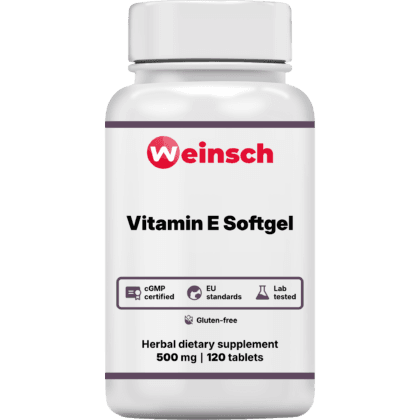
Vitamin E Softgel