Mugwort Leaf (Ai Ye) – The Botanical Used in Traditional Systems to Warm the Body and Support Female ComfortMugwort leaf (Ai Ye) is the traditional Chinese medicine name for the dried leaves of Artemisia argyi, an intensely aromatic botanical that has been a cornerstone of traditional East Asian herbal systems and moxibustion practices for over 2000 years. It is regarded as a powerfully warming and dispersing herb, particularly suitable for formulas aimed at dispelling internal cold, supporting healthy circulation, and promoting menstrual comfort.Traditional Understanding in TCM SystemsWithin traditional Chinese medicine, Mugwort leaf (Ai Ye) is described as a warming substance with pungent and bitter properties. In the TCM theoretical framework, it acts primarily on the so-called Liver, Spleen, and Kidney meridians. According to this traditional description, Mugwort leaf (Ai Ye) warms the meridians, stops bleeding, and dispels "Cold-Dampness" – TCM concepts that refer to poor circulation, trapped chill, and stagnant fluids in the lower body. When cold accumulates in the lower abdomen or uterus, related discomforts or stagnation can arise. Mugwort leaf (Ai Ye) helps perform this "warming and unblocking" effect.In TCM formulas (and the external practice of moxibustion), Mugwort leaf (Ai Ye) is seen as a botanical that helps support normal pelvic circulation, soothe cold-induced cramps, and comfort the digestive system. It is traditionally used to promote healthy menstrual flow, alleviate aching or cold sensations in the lower back and abdomen, and foster a general sense of internal warmth.Botanical Composition and ResearchMugwort leaf (Ai Ye) contains primarily volatile essential oils (such as eucalyptol, borneol, and camphor), flavonoids (like jaceosidin and eupatilin), tannins, and polysaccharides. This phytochemical profile is connected in traditional applications with support for healthy blood flow, smooth muscle relaxation, and inflammatory balance.Modern scientific research shows that Mugwort extracts can offer specific benefits. Studies show that Mugwort leaf (Ai Ye) preparations:Possess antioxidant activity and can combat free radicals.Can have anti-inflammatory action, particularly for the pelvic and uterine tissues.Can support normal microcirculation and create a subjective feeling of warmth.Contain active volatile oils that are studied for their role in relaxing smooth muscles, offering comfort during menstruation.Can possess mild antimicrobial and antifungal properties.Can work supportively on normal immune function.Are used in traditional formulas (and external therapies) with enhanced effects on relieving cold-induced pain.Scientists particularly investigate how the essential oils and flavonoids of the leaf can contribute to a normal inflammatory response and support healthy female reproductive function.Traditional Applications – TCM ContextIn traditional TCM formulas, Mugwort leaf (Ai Ye) is classically used in situations described as:Menstrual discomfort or cramping relieved by the application of heat.A feeling of deep cold or aching in the lower abdomen and lower back.Irregular menstrual flow associated with "Cold" or stagnation.Tendency toward cold hands, feet, or an overall chilly constitution.Sluggish digestion accompanied by a cold sensation in the stomach.Restless fetal movements related to cold (in traditional maternal care).These are traditionalist descriptions that form part of the TCM thinking system and must not be equated with medical diagnoses in the sense of European medicinal product law.Well-being and Daily UseMugwort leaf (Ai Ye) is valued by modern users as part of a conscious wellness routine aimed at menstrual comfort, internal warming, and pelvic health, especially during the colder months or when prone to lower abdominal tension. The herb works optimally in balanced herbal teas or external soaks (and as smoldering moxa), combined with a warming diet, adequate rest, and the application of physical warmth to the body.Many users see Mugwort leaf (Ai Ye) as part of a targeted, comforting approach to dispelling cold and supporting female vitality – as a supportive element in traditional routines, alongside professional guidance and regular medical care when needed.
-
€ 24,50

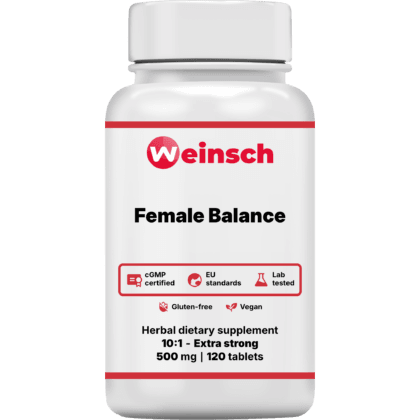
Female Balance
-
€ 24,50

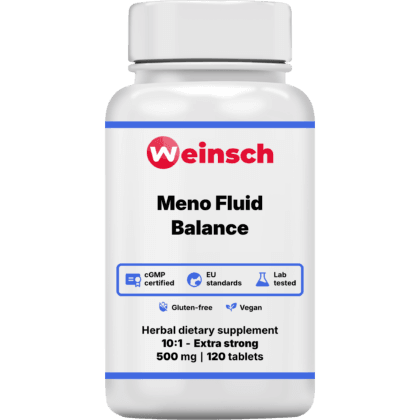
Meno Fluid Balance