-
€ 33,50

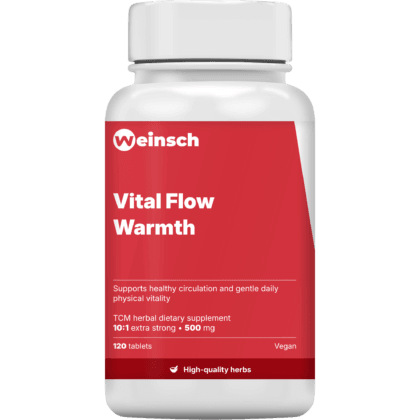
Vital Flow Warmth
Drynaria Rhizome
Drynaria Rhizome (Gu Sui Bu) – The Botanical Used in Traditional Systems to Strengthen Bones and Support Healing
Drynaria rhizome (Gu Sui Bu) is the traditional Chinese medicine name for the dried rhizome of Drynaria fortunei, an important botanical that has been used in traditional East Asian herbal systems for centuries. It is regarded as a plant with warm and bitter properties, famously earning its Chinese name, which translates literally to “mender of shattered bones”. It is particularly suitable for formulas aimed at healing skeletal trauma, strengthening the lower back, and supporting bone health.
Traditional Understanding in TCM Systems
Within traditional Chinese medicine, drynaria rhizome (Gu Sui Bu) is described as a warm and bitter substance. In the TCM theoretical framework, it acts primarily on the Kidney and Liver meridians. According to this traditional description, drynaria rhizome (Gu Sui Bu) strongly tonifies “Kidney Yang” – a TCM concept that governs the body’s foundational warming energies and is deeply connected to skeletal strength, hearing, and the aging process. When Kidney Yang is deficient, issues such as chronic lower back pain, weak knees, loose teeth, tinnitus, and hearing loss can arise. Drynaria rhizome (Gu Sui Bu) helps perform a targeted “tonifying and mending” effect.
In TCM formulas, drynaria rhizome (Gu Sui Bu) is seen as a botanical that not only strengthens bones and sinews but also activates blood circulation to remove “blood stasis”. It is traditionally used to promote the healing of fractures, alleviate pain from contusions and sprains, and stop chronic diarrhea linked to coldness in the Kidneys.
Botanical Composition and Research
Drynaria rhizome (Gu Sui Bu) contains various bioactive compounds, including flavonoids like naringin, which are thought to be responsible for its therapeutic effects on bone tissue. This phytochemical profile is connected in traditional applications with the support of the skeletal system and recovery from physical trauma.
Modern scientific research shows that Drynaria fortunei extracts can offer specific benefits. Studies show that drynaria rhizome (Gu Sui Bu) preparations:
-
Possess significant bone-strengthening properties and are widely investigated for their ability to help manage and prevent osteoporosis, including glucocorticoid-induced osteoporosis.
-
Can stimulate the healing of damaged bones, ligaments, and soft tissues.
-
Provide anti-inflammatory and pain-relieving actions, particularly useful for arthritic disorders, osteoarthritis, and rheumatic pain.
-
Can help improve dental health by addressing bleeding gums and loose teeth.
-
Are traditionally used topically to stimulate hair growth and manage conditions like alopecia.
Scientists particularly investigate how the flavonoids in the rhizome contribute to bone cell proliferation and the overall modulation of skeletal metabolism.
Traditional Applications – TCM Context
In traditional TCM formulas, drynaria rhizome (Gu Sui Bu) is classically used in situations described as:
-
Traumatic injuries, including bone fractures, sprains, contusions, and soft tissue damage.
-
Weakness, atrophy, or pain in the lower back, feet, and knees associated with Kidney deficiency.
-
Degenerative joint issues like osteoarthritis and rheumatic arthritis.
-
Dental and auditory decline, such as loose teeth, bleeding gums, tinnitus, and deafness.
-
Chronic diarrhea originating from a lack of internal Kidney warmth.
-
Topical applications for localized pain, swelling, or hair loss (alopecia).
These are traditionalist descriptions that form part of the TCM thinking system and must not be equated with medical diagnoses in the sense of European medicinal product law.
Well-being and Daily Use
Drynaria rhizome (Gu Sui Bu) is highly valued by modern users as part of a targeted wellness routine aimed at skeletal health, active recovery from physical injuries, and joint comfort. It is available whole, in powders, pills, or decoctions, and works optimally within balanced herbal mixtures (often alongside other bone-strengthening herbs like Du Zhong or Niu Xi) combined with appropriate physical therapies. Because it is a warm, Yang-tonifying herb, it is generally used with caution by those presenting with Yin deficiency (internal heat).
Many users see drynaria rhizome (Gu Sui Bu) as a vital intervention for bone vitality and injury recovery – functioning as a supportive element in traditional routines, strictly alongside professional guidance and regular medical care when needed.