Dragon’s Blood (Xue Jie) – The Resin Used in Traditional Systems to Support Healing and Blood CirculationDragon's blood (Xue Jie) is the traditional Chinese medicine name for a distinctive red resin obtained from several species of trees, notably from the Daemonorops, Dracaena, and Croton genera. This striking botanical has been an important component of traditional herbal systems across the world for centuries, valued for its neutral, sweet, and salty properties, and is particularly suited for formulas aimed at wound healing, pain relief, and invigorating blood flow.Traditional Understanding in TCM SystemsWithin traditional Chinese medicine, dragon’s blood (Xue Jie) is described as a sweet, salty, and neutral substance. In the TCM theoretical framework, it acts on the Heart and Liver meridians. According to this traditional description, dragon's blood (Xue Jie) belongs to the category of "Herbs that invigorate Blood". Its primary functions are to resolve so-called "Blood Stagnation" and stop bleeding. When Blood Stagnation occurs—often due to physical trauma, injury, or constrained circulation—acute pain, bruises, or internal masses can develop. Dragon’s blood (Xue Jie) helps perform this targeted "invigorating and dispersing" effect, while simultaneously protecting tissues from decay.In TCM formulas, dragon’s blood (Xue Jie) is seen as a botanical that helps promote the regeneration of flesh and tissue, relieve localized pain, and control bleeding from external injuries. It is traditionally used to support the healing of fractures, contusions, and sprains, as well as to ease menstrual irregularities tied to poor circulation.Botanical Composition and ResearchDragon’s blood (Xue Jie) is composed of a complex mixture of phytochemicals, primarily flavonoids, phenols, steroids, and terpenoids, which give the resin its therapeutic profile. This composition is connected in traditional applications with the support of the body's natural tissue repair processes and circulation.Modern scientific research shows that dragon's blood extracts can offer specific benefits. Studies show that dragon’s blood (Xue Jie) preparations:Possess significant wound-healing properties, with clinical trials showing it can speed up the healing process and promote collagen synthesis.Can have anti-inflammatory action, which may contribute to the rapid reduction of wound inflammation and joint pain.Can offer antibacterial and antimicrobial abilities, with specific compounds shown to be effective against Helicobacter pylori, the bacteria associated with peptic ulcers.Provide antioxidant effects that help protect cells from oxidative stress and damage.Can support healthy blood flow and have been investigated for potential benefits in cardiovascular conditions.Are recognized for antidiarrheal properties, with certain resin extracts even approved for specific medical applications.Scientists particularly investigate how the flavonoids and other active constituents in the resin contribute to cellular proliferation, pain modulation, and microbial defense.Traditional Applications – TCM ContextIn traditional TCM formulas, dragon’s blood (Xue Jie) is classically used in situations described as:Traumatic injuries, including fractures, severe bruising, sprains, and contusions.External bleeding from cuts, wounds, or ulcers that require tissue regeneration.Acute, localized pain caused by blood stasis.Chronic, non-healing sores or abscesses.Internal discomforts related to poor circulation, such as painful menstruation or abdominal masses.Gastrointestinal discomforts, including diarrhea and stomach ulcers.These are traditionalist descriptions that form part of the TCM thinking system and must not be equated with medical diagnoses in the sense of European medicinal product law.Well-being and Daily UseDragon’s blood (Xue Jie) is valued by modern users as part of a targeted wellness routine aimed at accelerating recovery from physical trauma, supporting skin and wound healing, and promoting circulatory health. Because it is a potent resin, it is typically used topically in creams, liquids, or ointments for external issues, or ingested in carefully measured herbal formulas (often powders or pills) for internal stagnation.Many users see dragon’s blood (Xue Jie) as a powerful, specialized intervention for acute injuries and slow-healing tissues – functioning as a supportive element in traditional routines, strictly alongside professional guidance and regular medical care when needed.
-
€ 24,50

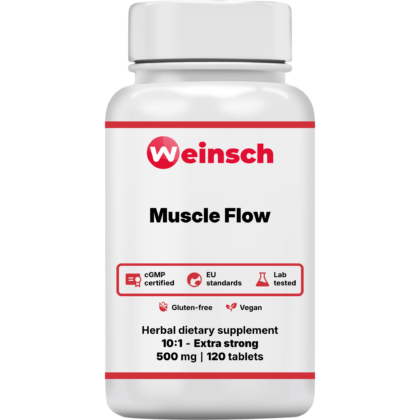
Muscle Flow