-
€ 20,00

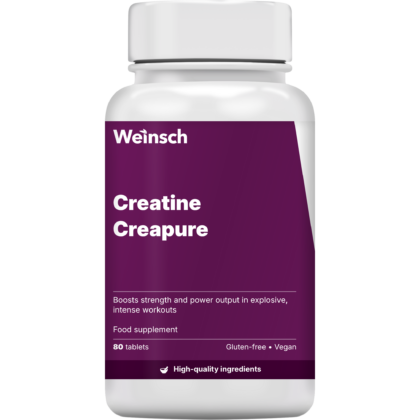
Creatine Creapure
-
€ 12,00
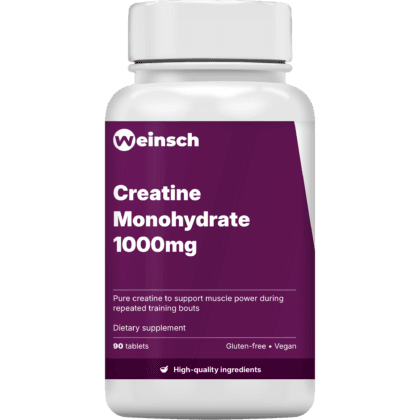
Creatine Monohydrate 1000mg
Creatine Monohydrate
Creatine Monohydrate – Performance-enhancing and energy-supporting supplement
Creatine is a naturally occurring compound that plays a vital role in providing energy, primarily to our muscle and nerve cells. In the form of the dietary supplement creatine monohydrate (the most extensively researched and effective form available), it is widely used to enhance physical performance during short, high-intensity exercises. While it is most famous within the strength training and fitness communities for increasing explosive power and muscle mass, recent research demonstrates that it also offers significant benefits for brain function, cognitive health, and overall vitality, making it a valuable addition for a broad demographic.
Characteristics, Origin, and Composition
The human body naturally produces a small amount of creatine daily in the liver and kidneys, and we also absorb it through foods like red meat and fish. However, these natural stores are not sufficient to fully saturate the muscles. By taking creatine monohydrate as a supplement, intramuscular creatine stores can be maximized by roughly 20%.
Its mechanism in the body is entirely centered around energy. For rapid, powerful movements, muscles require energy in the form of ATP (adenosine triphosphate). This ATP supply is highly limited and depletes after just a few seconds of heavy exertion (like sprinting or weightlifting). This is where creatine (stored in the muscle as phosphocreatine) steps in: it instantly donates a phosphate molecule to rapidly resynthesize the consumed ATP. Through this mechanism, creatine acts as a lightning-fast “energy buffer,” allowing muscles to sustain maximum output for longer periods before fatigue sets in. Additionally, creatine draws water into the muscle cells (cell volumization), which triggers anabolic (muscle-building) processes and inhibits muscle breakdown (catabolic myostatin).
Use in Dietary Supplements
Creatine monohydrate (typically found as a tasteless white powder dissolved in water) is primarily used for:
-
Increasing Muscle Strength and Performance: Because ATP is regenerated faster, athletes can train with higher intensity, perform more repetitions, and lift heavier weights.
-
Muscle Growth (Hypertrophy): The increase in overall training volume, combined with cell volumization, stimulates a greater increase in lean muscle mass over time.
-
Accelerated Recovery: It helps to reduce muscle damage and inflammation following intense workouts, facilitating quicker recovery.
-
Cognitive Support: The brain, much like muscles, consumes vast amounts of ATP. Supplementation can enhance energy availability in the brain, reduce mental fatigue, and offer protection against neuro-oxidative stress—benefits particularly notable in vegetarians and older adults.
Everyday Use and Well-Being
Creatine monohydrate is one of the most thoroughly studied and safest supplements in the world. For optimal results, a daily dosage of about 3 to 5 grams is commonly recommended (often taken with carbohydrates to improve absorption). A common, harmless side effect during the initial phase is a slight increase in body weight (0.6 to 2 kilograms); this is not fat gain, but simply extra intracellular water retained within the muscles, which is actually a desirable effect for muscle growth. In rare cases, or if taken in excessively high doses, it may cause mild stomach or intestinal discomfort.