Corydalis Rhizome (Yan Hu Suo) – The Botanical Used in Traditional Systems to Support Comfort and Smooth Energy FlowCorydalis rhizome (Yan Hu Suo) is the traditional Chinese medicine name for the processed tuber of Corydalis yanhusuo, a distinctive botanical that has been part of traditional East Asian herbal systems for many centuries. It is regarded as a plant with warming and moving properties, particularly suitable for formulas aimed at physical comfort, smooth circulation of internal energy and the reduction of stagnation.Traditional Understanding in TCM SystemsWithin traditional Chinese medicine, corydalis rhizome (Yan Hu Suo) is described as a pungent, bitter and warm substance with strongly moving properties. In the TCM theoretical framework, it acts on the so-called Heart, Liver and Spleen meridians. According to this traditional description, corydalis rhizome (Yan Hu Suo) moves the so-called “Qi” and Blood – TCM concepts that refer to functional energy flow and circulation. When Qi and Blood become constrained or stagnant, discomfort, tension and fixed pain can arise. Corydalis rhizome (Yan Hu Suo) helps perform this “moving” and unblocking effect.In TCM formulas, corydalis rhizome (Yan Hu Suo) is seen as a botanical that helps support physical comfort, promote smooth energy movement and reduce stagnation-related discomfort. It is traditionally used to support abdominal comfort, menstrual comfort, chest comfort and general ease of movement.Botanical Composition and ResearchCorydalis rhizome (Yan Hu Suo) contains primarily isoquinoline alkaloids, including tetrahydropalmatine, dehydrocorybulbine and related compounds. This phytochemical profile is connected in traditional applications with support for normal pain balance, nervous system calm and circulatory function.Modern scientific research shows that corydalis rhizome extracts can offer specific benefits. Studies show that corydalis rhizome (Yan Hu Suo) preparations:Possess analgesic activity and can support normal pain comfort.Can have anti-inflammatory action in several tissue models.Can support normal circulation and the smooth movement of internal pathways.Can work supportively on normal nervous system balance.Can possess mild calming properties that may support relaxation.Contain alkaloids that are being studied for their interaction with pain-signaling pathways.Are used in traditional formulas with enhanced effects on discomfort associated with stagnation.Are being investigated for their role in supporting muscular and abdominal comfort.Scientists particularly investigate how the alkaloid components of corydalis rhizome can contribute to normal pain modulation, healthy inflammatory balance and normal neurochemical signaling.Traditional Applications – TCM ContextIn traditional TCM formulas, corydalis rhizome (Yan Hu Suo) is classically used in situations described as:Abdominal discomfort or cramping.Menstrual discomfort with a stagnant character.Chest or rib-side tension.Discomfort associated with traumatic injury or impact.Head discomfort linked to stagnation.Digestive unease with a constrained feeling.General fixed or wandering pain related to impaired Qi and Blood flow.Post-exertion discomfort with a blocked sensation.These are traditionalist descriptions that form part of the TCM thinking system and must not be equated with medical diagnoses in the sense of European medicinal product law.Well-being and Daily UseCorydalis rhizome (Yan Hu Suo) is valued by modern users as part of a conscious wellness routine aimed at physical comfort, ease of movement and balanced internal flow, especially when they experience tension, tightness or discomfort associated with a sedentary lifestyle or stress. The herb works optimally in balanced herbal mixtures, combined with regular movement, good sleep and a generally supportive diet.Many users see corydalis rhizome (Yan Hu Suo) as part of a longer-term approach to comfort and daily balance – as a supportive element in traditional routines, alongside professional guidance and regular medical care when needed.
-
€ 24,50

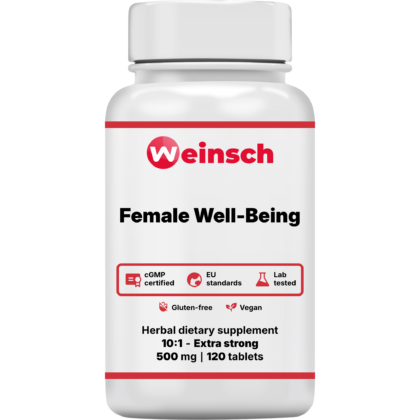
Female Well-Being
-
€ 24,50

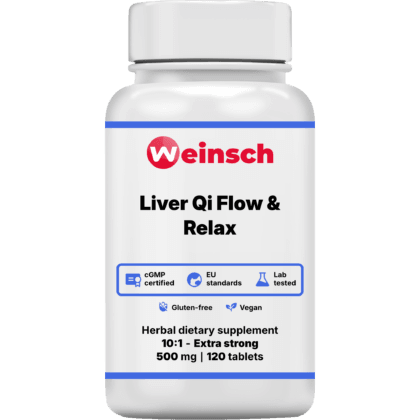
Liver Qi Flow & Relax
-
€ 24,50

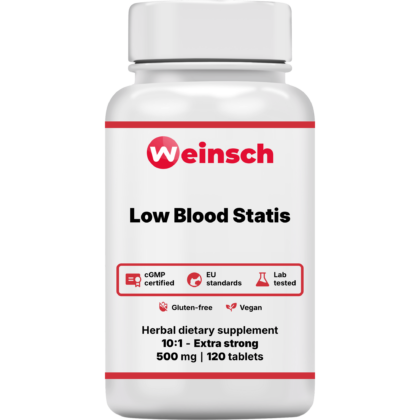
Low Blood Statis
-
€ 24,50

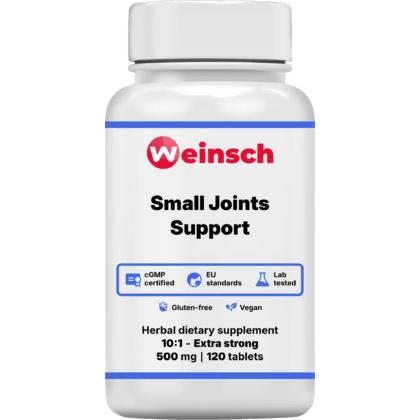
Small Joints Support