-
€ 33,50

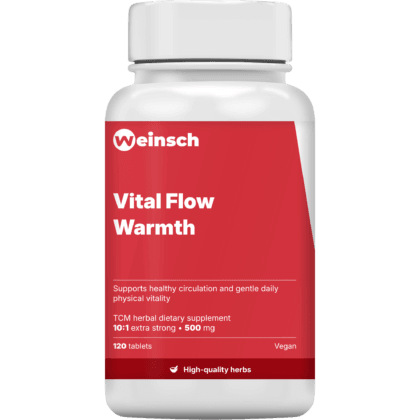
Vital Flow Warmth
Acanthopanax Bark
Acanthopanax bark (Wu Jia Pi) – The Herb Used in Traditional Systems to Support Bone Strength, Joint Comfort and Lumbar Vitality
Acanthopanax bark (Wu Jia Pi) is the traditional Chinese medicine name for the peeled root bark of Acanthopanax gracilistylus, an important warming and tonifying herb that has been part of traditional East Asian herbal systems for over 2000 years. This herb is particularly known for its ability to resolve Wind‑Damp stagnation and strengthen muscles, tendons and bones – making it a popular choice for people with a tendency toward joint discomfort, lower back pain and general physical weakness.
Traditional Understanding in TCM Systems
Within traditional Chinese medicine, acanthopanax bark (Wu Jia Pi) is described as an herb with warming, acrid and bitter properties. In the TCM theoretical framework, it acts on the so‑called Liver and Kidney meridians. According to this traditional description, acanthopanax bark (Wu Jia Pi) helps resolve “Wind‑Damp” – a crucial TCM concept that stands for obstruction patterns in joints and lower back with sensations of heaviness, stiffness and cold sensitivity.
Acanthopanax bark (Wu Jia Pi) is also seen as a “tonic for bones and tendons” – meaning it helps build the structural integrity and vitality of the skeletal system and connective tissues. Particularly important is that it also tonifies the Liver and Kidneys – two organ systems that in TCM are considered crucial for long‑term muscle strength and structural well‑being.
Botanical Composition and Research
Acanthopanax bark (Wu Jia Pi) contains over 50 bioactive compounds, including triterpenoid saponins, lignans (chiisanoside derivatives), phenolic compounds, terpenoids and essential oils. The key active constituents are:
-
Eleutherosides (particularly eleutheroside E and G)
-
Triterpenoid saponins (gracilistones A‑D, chiisanoside derivatives)
-
Phenolic compounds (acteoside, quercetin)
-
Sesquiterpenoids (gracilistones, syringaresinol)
Modern scientific research shows that acanthopanax bark (Wu Jia Pi) extracts can offer diverse biological benefits:
-
Anti‑inflammatory action: Studies show that active components can inhibit iNOS (inducible nitric oxide synthase) and COX‑2 – key enzymes in inflammatory reactions. This helps maintain normal inflammation balance in joints and bones.
-
Hepatoprotective properties: Research suggests that certain components such as quercetin and acteoside have strong antioxidant effects and can help prevent liver cell damage.
-
Antioxidant action: acanthopanax bark (Wu Jia Pi) possesses strong antioxidant power, helping to provide protection against free radicals.
-
Tonification effects: Traditionally it is seen as a “body‑strengthening” tonic, which aligns with modern insights into support for normal structural health.
-
Damp pain relief: Studies suggest that certain sesquiterpenoids (gracilistones) may potentially work against damp‑related pain patterns.
-
Support for normal urine excretion: TCM tradition and modern research suggest that acanthopanax bark (Wu Jia Pi) can promote normal damp transformation.
Traditional Applications – TCM Context
In traditional TCM formulas, acanthopanax bark (Wu Jia Pi) is classically used in situations described as:
-
Joint pain or superficial arthralgias patterns, particularly of Wind‑Damp character
-
Lower back pain or lumbar vitality weakness, especially Kidney‑deficiency related
-
Stiffness or limited movement in bones and tendons
-
Weakness in legs or feet
-
Fluid accumulation in legs or feet (oedema‑like pattern)
-
General physical weakness or low energy levels, especially in old age
-
Supporting normal muscle and tendon resilience
-
Maintaining normal movement freedom and mobility
These are traditionalist descriptions that form part of the TCM thinking system and must not be equated with medical diagnoses in the sense of European medicinal product law.
Well‑being and Daily Use
Acanthopanax bark (Wu Jia Pi) is valued by modern users as part of a conscious wellness routine aimed at joint and lumbar comfort, normal mobility and overall physical strength, especially when they engage in physical effort or wish to support their structural well‑being. The herb works optimally in balanced herbal mixtures, combined with regular movement (such as tai chi or gentle exercises), adequate rest and nutrition with sufficient protein.
Many users see acanthopanax bark (Wu Jia Pi) as part of a long‑term approach to physical strength and mobility – as a supportive element in traditional routines, alongside professional guidance and regular medical care when needed.